
Totenkopf
Memento Mori


I have been a television kid my whole life.
I grew up as cable was still spreading out past sitcoms and ballgames.
When whole channels filled themselves with documentaries and reenactments and the long quiet voices of narrators walking you through a war.
I watched weeks of Band of Brothers.
I sat through the History Channel back when it earned the name.
I grew up around men who knew the Second World War the way other men know baseball statistics, and the talk in those rooms was constant and detailed and proud of its detail.
I don’t memorize, I recognize.
I watch things long enough and the connections rise up on their own.
When the name of a certain skull came across my screen during a Senate race in Maine, I did not know it.
I had to look it up.
A symbol that the news was treating as though it were as plain as a swastika on a forehead, and me, a TV kid who loved documentaries didn’t recognize it blew me away.
If I had to research it, and I am still researching it as I write this, then it is not common knowledge.
Hold that thought.
We are going to walk a long way and come back to it.
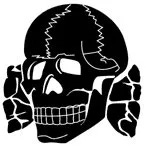
The word is Totenkopf.
In German it is built the way German builds things, by hammering two plain words together until they make one heavy one.
Tot, which is death.
Kopf, which is head.
Death’s head.
There is no poetry in the construction.
The gravity comes from how literal it is.
The thing itself is far older than the word, and far older than Germany.
A skull is one of the first mirrors a human being ever found.
It outlasts the voice.
It stares back after the person is gone.
Every civilization, sooner or later, picked one up out of the ground and understood that death had a face.
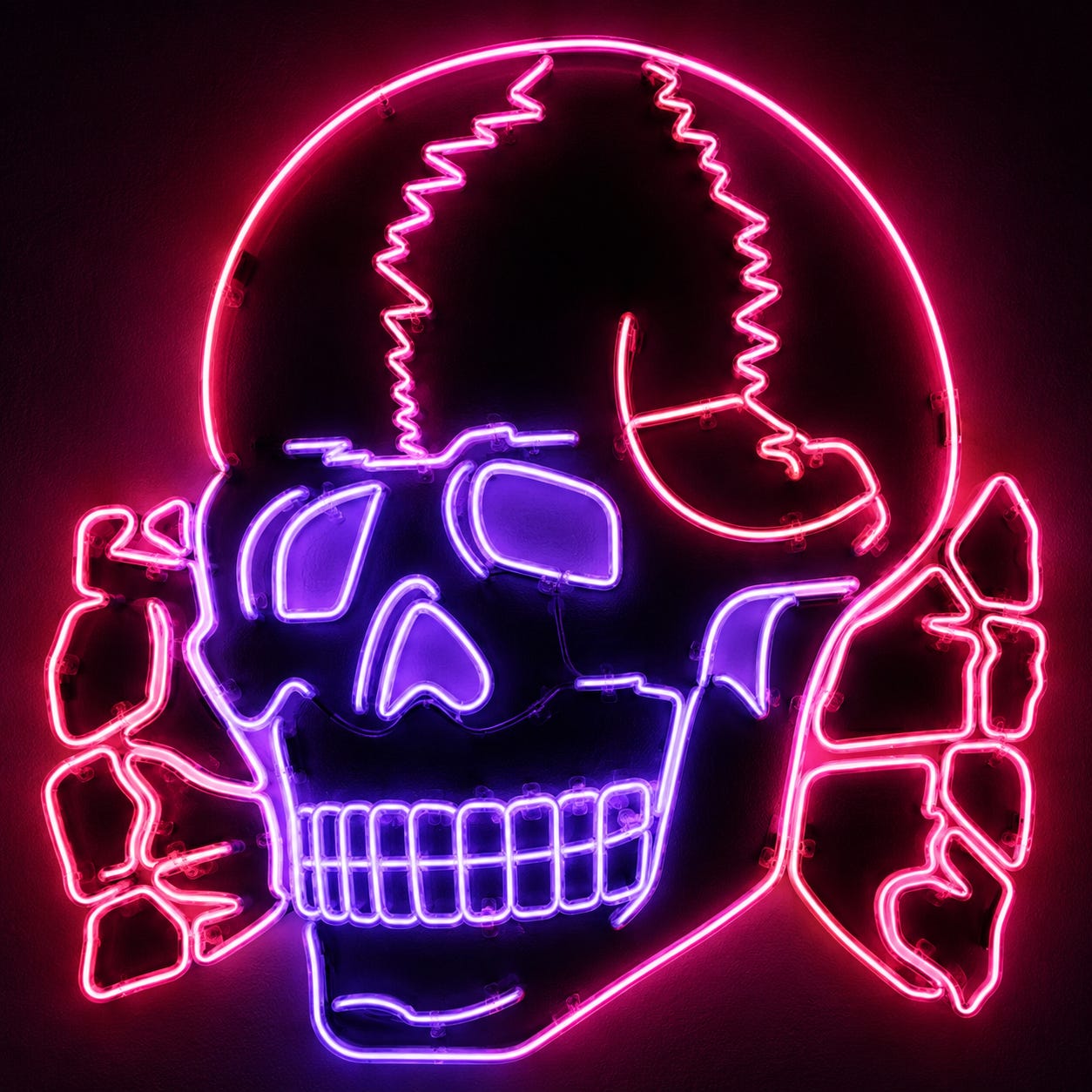
The skull was already ancient and already loaded before any soldier ever stitched one onto a hat.
In medieval Europe the skull belonged to the church before it belonged to any army.
A monk kept one in his room on purpose.
It was a discipline, a way of remembering that the body becomes bone and that the bishop and the beggar end in the same ruin.
The Latin phrase for it was memento mori, remember that you must die.
The cathedrals carried death out in the open, in bone rooms and tomb carvings, because that world did not hide its dead behind hospital curtains the way we do.
The skull was a religious object first.
It taught the living to be humble.
The skull moved from the monastery to the saddle, and its meaning began to change.
The cleanest place to watch that change is Prussia.
In 1741, the king known as Frederick the Great raised a regiment of light cavalry and put them in black, and on the front of their caps he put a silver skull with no lower jaw.
They borrowed the idea, as it happens, from irregular horsemen they had fought against, so even at the so-called beginning the symbol was already a thing passed from hand to hand.
These were the Black Hussars, and the skull on them did not mean evil.
It meant something closer to a vow.
It told the enemy that these were men who had already counted themselves among the dead, and a man who has done that does not flinch.
Fear loses its grip on a soldier who has decided in advance that he is gone.
The skull was theater, and it was also a promise, and for a long time those were the only things it was.
The promise hardened over the next century, because every group that took up the skull took it up out of a wound.
When Napoleon’s armies broke the small German state of Brunswick, the dispossessed duke raised a corps of his own in 1809 and dressed them all in black and gave them the death’s head as a badge of revenge.
They were called the Black Brunswickers, and their skull was not mourning.
It was a debt the living meant to collect.
The duke himself was killed years later in battle, after he chose the symbol, not before.
This is the pattern worth noticing as we go.
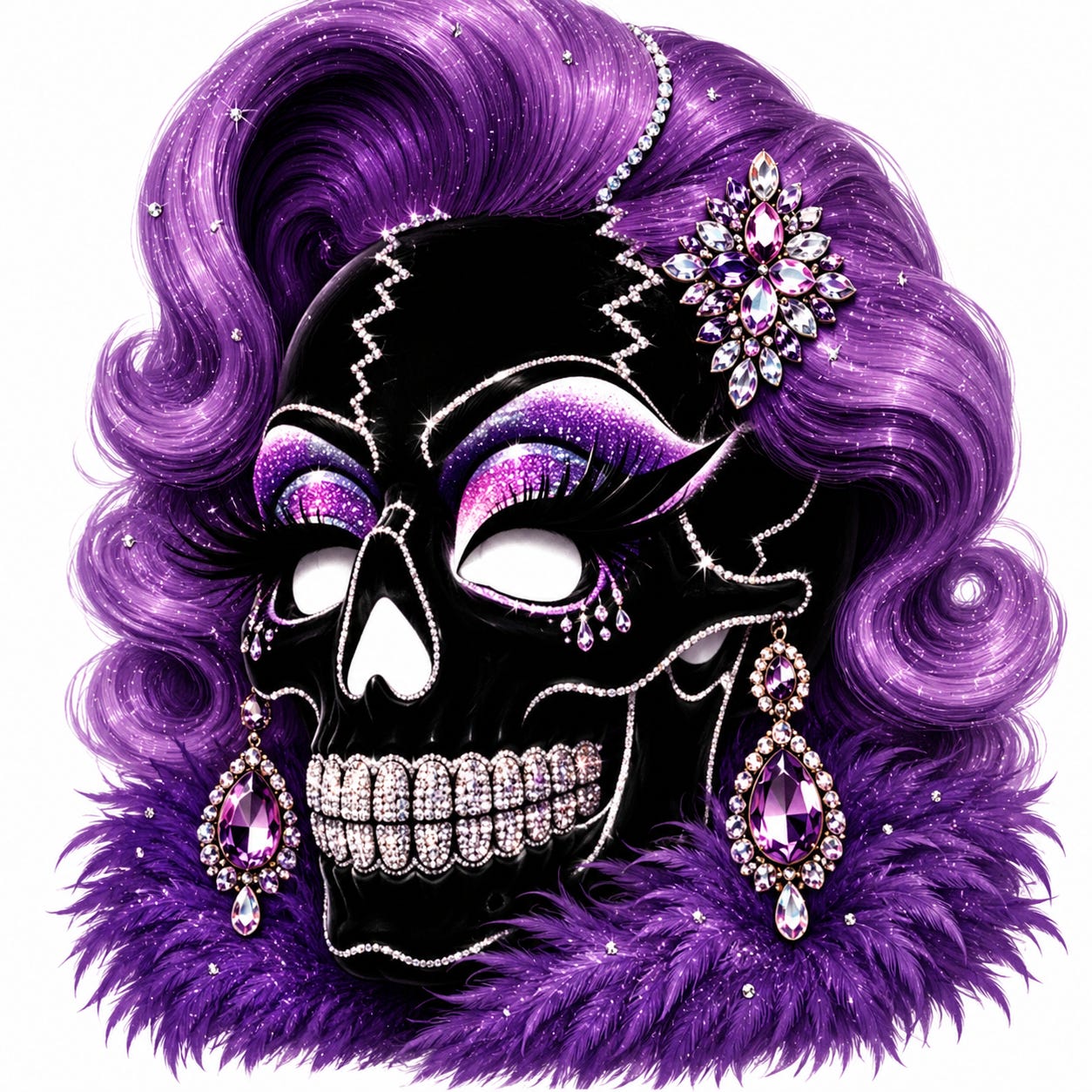
The skull keeps getting picked up by people who have lost something and want the authority that comes from standing close to death.
The First World War poured fuel on all of it.
The trenches broke the old language of glory, and yet the breaking did not kill the death worship, it fed it.
German assault troops, the ones sent first into the worst of it, painted skulls on their helmets.
When that war ended in defeat and the country fell into chaos, armed bands of bitter veterans formed up in the wreckage.
They were called the Freikorps, and they were the rough bridge between the old empire and what came next.
They carried the skull too, because by then the symbol meant fatalism and a certain kind of hard, doomed pride, and those men had nothing else.
Out of that world came the men who built the machine.
In 1933 and 1934, a man named Heinrich Himmler was building the SS into something more than a police force.
He wanted an order, almost a dark priesthood, dressed in old symbols and false history to make ordinary men feel they had joined something eternal.
The skull was perfect for that, and the SS took it.
In 1934, the regular German army had begun putting the old Prussian skull on its tank crews, claiming the proud cavalry tradition for itself.
The SS did not want to be confused with the regular army.
So the SS sat down and designed its own skull, a different one, on purpose, on the sixth of October 1934.
The new design had a lower jaw, it had teeth.
The skull turned slightly to the side, and the crossed bones sat behind the head instead of underneath it.
A firm in Munich made them in silver-colored metal.
That redesign is the fact the whole modern argument forgets.
There is not one death’s head, there are at least three.
There is the old jawless Prussian one.
There is the plain skull and crossbones you know from pirate flags and poison bottles, which has nothing to do with any of this.
There is the specific 1934 SS design, with the jaw and the teeth and the bones behind the skull, drawn deliberately to stand apart from the others.
The men who ran the evil drew the line themselves.
They needed their skull to be recognizable as theirs.
What their skull came to mean is the worst thing a symbol has ever meant.
The units that wore it as their own badge were the SS-Totenkopfverbände, the Death’s Head units, and their assigned work was the concentration camps.
The skull went up over the gates and onto the records and the transports.
The men who later formed the 3rd SS Panzer Division, the one named Totenkopf, came largely out of those camp guards, and that division left a trail of murdered prisoners and civilians across Europe, ninety-seven unarmed British prisoners machine-gunned at a French hamlet in a single afternoon among them.
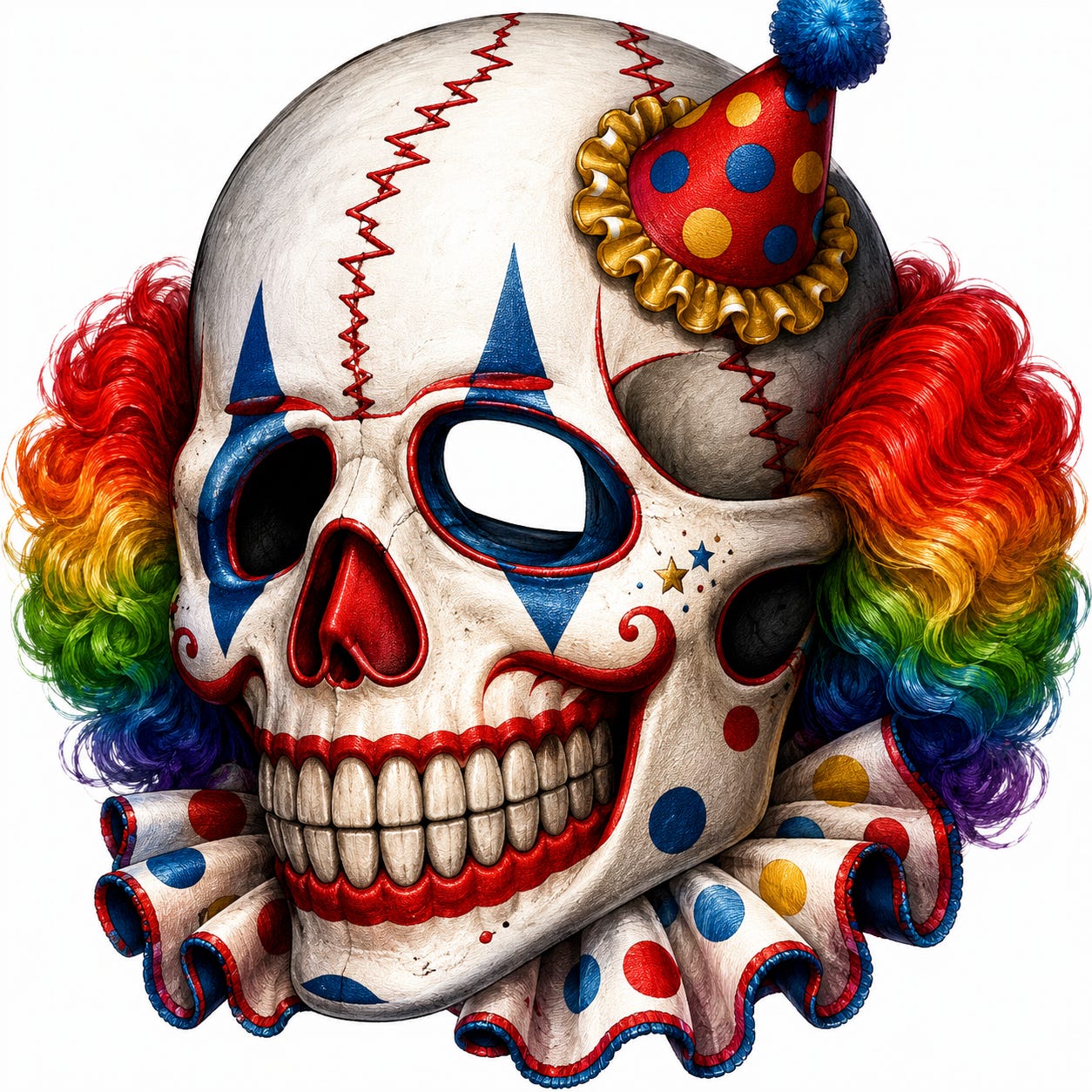
The skull that began as a monk’s reminder to stay humble became the face of death made into paperwork and schedule.
That is not a small drift in meaning.
That is a symbol dragged all the way to hell.
After the war the symbol could never be clean again in Europe, and it was never going to be.
Germany made the SS version illegal, the same as the swastika.
In America the Anti-Defamation League lists it as a hate symbol, and the neo-Nazis who crawled out of the rubble did adopt it, so the listing is fair.
Read what the ADL actually wrote, because it matters more than the headline version of it.
The group says plainly that it is this particular image, the SS design, that is the hate symbol, and not any skull and crossbones.
It says each case must be read in its context.
It even says that some people get such a tattoo without knowing what it carries, and that the right thing is to ask the person what they meant by it.
Sit with that for a second, because the very organization most often pointed to as the authority is the one telling you the symbol is not self-evident.
They built the caution into their own definition.
They had to, because the truth is that an ordinary person, even a well-read one, even one raised on the documentaries, does not reliably carry the difference between a pirate skull, a Prussian cavalry skull, and the 1934 SS skull.
I am the proof of it, and so are you if you are honest about whether you knew this before today.
Now we come back to Maine.
A man named Graham Platner runs for the Senate seat that Susan Collins has held a long time.
Somewhere along the way an old video surfaced, shared by his own sister-in-law for an anniversary, showing him shirtless at a wedding with a skull tattooed on his chest.
He said he got it drunk in Croatia with fellow Marines in 2007, and that he did not know it resembled the SS design until reporters told him, and he had it covered over.
That is the spark.
Everything after it is meaning that other people poured onto that image.
Watch how the meaning got poured, because the pouring is the story.
His own former campaign director, no friend of Republicans, said she believed he knew what it was, and that belief is the single hardest piece for his defenders to wave away, so I will not wave it away.
One anonymous acquaintance told a publication that years ago Platner had called it “my Totenkopf” in a joking way, and a second outlet then interviewed that same single person again, which is not the same as a second witness, though it was often reported as if it were.
Platner’s own deleted internet posts show he knew the military-subculture version of the symbol, the death-unit bravado of it, which is a real thing to know and is not the same as embracing what the camps did.
Those are the honest threads, and they pull in more than one direction.
Then the apparatus took those threads and made something else out of them.
The Senate Republicans’ campaign arm took the contested, single-sourced, still-arguable material and published it under a flat headline announcing as settled fact that Platner knew he had a Nazi tattoo.
A Republican outlet dug up another old post to keep the theme alive.
Then a group that included a staffer from that same Republican campaign arm stood outside a Democratic headquarters with a bullhorn and accused the man, with no evidence at all, of being a pedophile, some of them in towels mocking a photo of him.
In the most recent wave, the loudest single accuser turned out to be a woman who had worked six years at the Heritage Foundation, a registered Republican operative who had staffed a presidential campaign, a detail the reporting itself confirmed.
The bullhorn is the thing that tells you what this always was.
A campaign that actually cared whether a 1934 cap badge was correctly identified does not end up screaming a child-abuse accusation through a megaphone in a towel.
The tattoo was a surface, and the surface was usable for one reason only, which is the reason this whole long walk has been building toward.
The symbol is obscure.
Its meaning is real and its history is genuinely terrible, and at the very same time almost no ordinary person can read it on sight or tell the banned version from the pirate version from the cavalry version.
That obscurity is the opening.
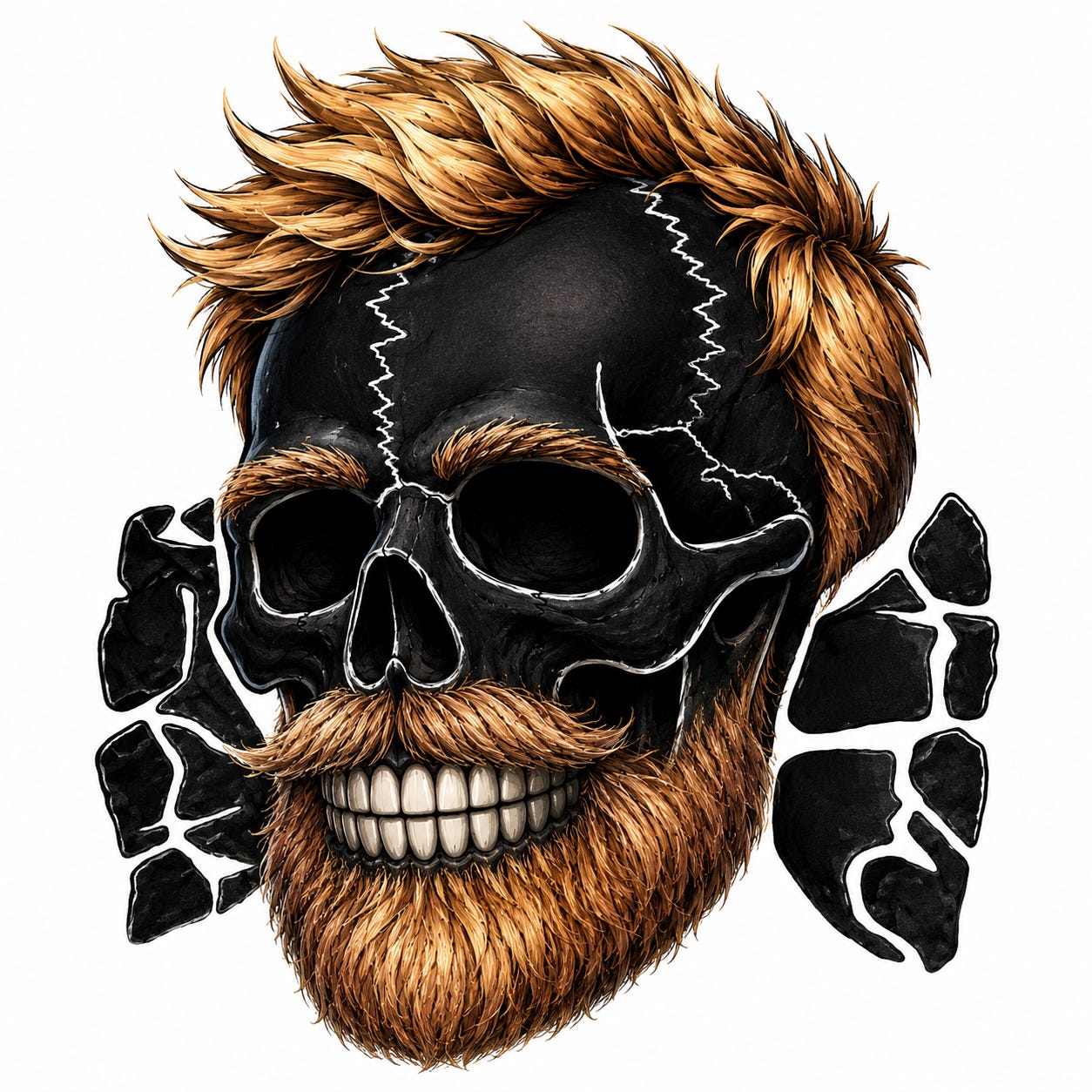
A thing that the public cannot quickly check is a thing that can be defined for them by whoever shouts first and loudest.
Collapse the three skulls into one.
Collapse “resembles” into “is.”
Collapse “is” into “Nazi.”
Drop a qualifier at every step, and a drunken tattoo from a bar in Croatia comes out the far end looking like a man stood guard at Auschwitz.
I cannot tell you what was in Graham Platner’s head when he was young and far from home.
I am not trying to.
I do not need him to be a good man to see clearly what was done with that skull on his chest.
He’s had a psychological past that needs processing from being in a culture that pushes aggression and hive think.
What I can tell you is what the symbol is, where it came from, and how far it traveled from a monk’s quiet room to a camp gate to a Munich workshop stamping silver in 1934.
I can tell you that the distance between what the records actually support and what the megaphone actually claimed is the exact distance a smear travels when the thing it rides on is something almost nobody was ever taught to recognize

.
Thank you for sharing this information. I consider myself an amateur historian but I had to research the contested tattoo. And 25 years with the Navy and I can tell you I have seen many tattoos that sailors got on a drunk night with buddies.
Well I guess I planted you and you grew. That was a fascinating history. People do see symbols that were meant to mean one thing but to each individual mean something else entirely. Is that why "it's the thought that counts" is so true?