
Benedict Arnold
Local Hero


I come from patriots.
Not the 2026 version of that word, which has been usurped by the actual Confederate forces working to overturn the Constitution those original patriots bled for.
The ones who I mean had fought with blood and treasure to free themselves from the king of England, and they did it on ground I have driven across my entire life without knowing the half of what happened there.
My father’s family, the Guyettes, were French Canadian, their roots in the hunting and trapping culture along the waterways of the Lake Champlain corridor going back generations before the Revolution.
My Irish grandmother, Campbell, came from Massachusetts.
My mother’s family split between two lines.
The McMores, Scottish farmers who worked the land around Whitehall, and the Caracciolas, who came from Calabria, in southern Italy, who landed across from the railroad at the turn of the twentieth century, when most families making that same journey were absorbed into city tenements and factory labor.
Different directions, different centuries, different languages when they started, all of them ending up on the same ground between the southern tip of Lake Champlain and the Hudson River at Glens Falls.
I grew up in both places.
My father was from Glens Falls, my mother from Whitehall.
As a kid in Whitehall my grandmother would drive me through the different parts of town and point out the neighborhoods, where the Italian church sat, where the French church sat and where the different immigrants lived around town.
She was giving me the social map of a world already partially dissolved, the layers of arrival and settlement readable in the geography if you knew what you were looking at.
The television raised us as much as anything else, and the television gave us a version of American history that fit inside a half-hour block and left most of the actual record on the cutting room floor.
That is how I learned about Benedict Arnold.
Not from the ground, not from my grandmother’s drives through Whitehall, not from a teacher who thought to mention that the man had built a navy two miles from the Italian church.
I learned about him from a Brady Bunch episode where Peter Brady had to play a traitor in a school play and got booed offstage.
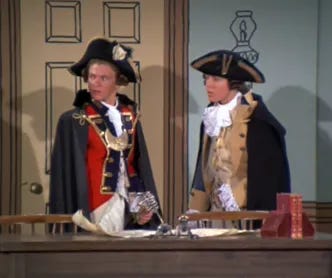
That was the complete file.
A punchline in a tricorn hat, a name that became a synonym for betrayal, handed to an entire generation by a sitcom, and we accepted it as the whole story.
I only recently learned what the ground already knew.
Philip Skene arrived at the southern end of Lake Champlain in 1759 with a land grant from King George III.
He built sawmills, a forge, a foundry, a general store, roads, and ships he sailed on the lake himself, assembling a working empire at the place he called Skenesborough, which would become Whitehall.
He was a British officer and a Tory, loyal to the crown that had granted him all of it, and by 1774 he had a stone house meant to sit like an English manor looking out over the water.
That estate still dominates the Whitehall skyline.
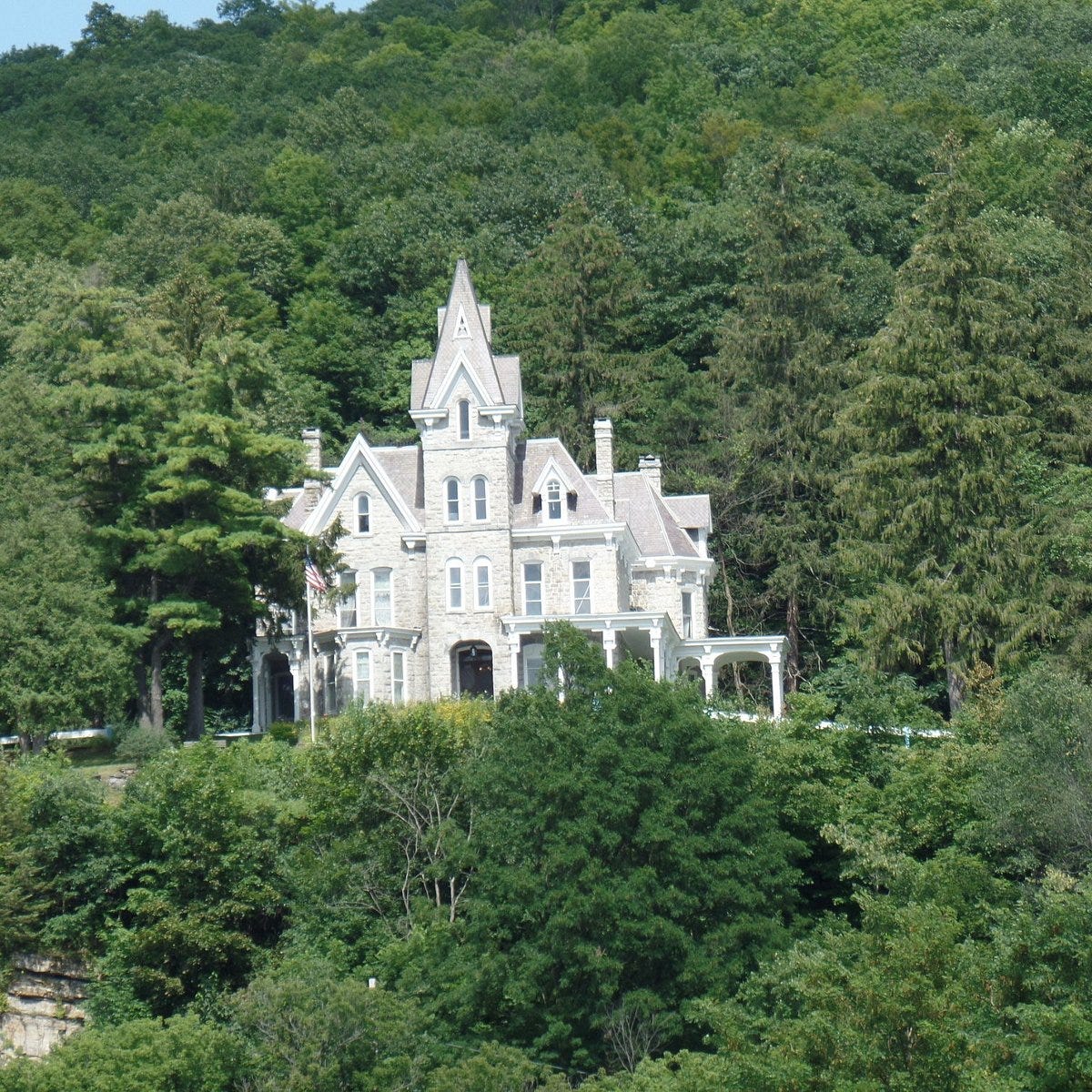
Skene Manor, people call it, a Victorian Gothic mansion built in 1874 on the Loyalist’s original land, constructed of gray sandstone quarried from the mountain by Italian immigrant stonecutters.
It sits on the hill above the town.
It is on the National Register of Historic Places.
There are tours, a tea room, a gift shop.
Local people fought to preserve it when it was nearly demolished in the 1990s, bumper stickers all over town reading “SOS: Savor Our Skene.”
Worth knowing, it was not even called Skene Manor until 1946, when a retired state trooper bought it, renamed it after the British Loyalist, and invented a ghost story about Philip Skene’s wife to drive bar customers.
The town preserved that, too.
The castle on the hill with the British officer’s name on it, built by the immigrant stonecutters, is what Whitehall chose to save.
Down by the water, there is a sign.
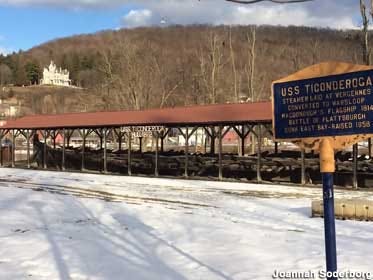
It says Whitehall is the birthplace of the United States Navy.
The New York State Legislature declared it in 1960, Congress confirmed it in 1965, and the actual United States Navy has never recognized the claim because the fleet Arnold built was a Continental Army operation, not a Continental Navy one.
Most people drive past the sign.
Benedict Arnold built that navy.
He built it in 1776, in the summer, on the bank of Wood Creek where it opens into the southern tip of Lake Champlain, using the Loyalist’s own shipyard infrastructure.
He built it from scratch, in the wilderness, recruiting two hundred carpenters and shipwrights to the cliffs and marshes of upstate New York and paying them more than anyone else in the Continental service because the conditions were that hard.
He supervised the construction himself, credited with the basic design of several of the vessels, training men who were farmers and tradesmen to crew a warship against the most powerful naval force in the world.
Before Arnold built a single plank of that fleet, he had already done things that should have made him a permanent fixture in the American story.
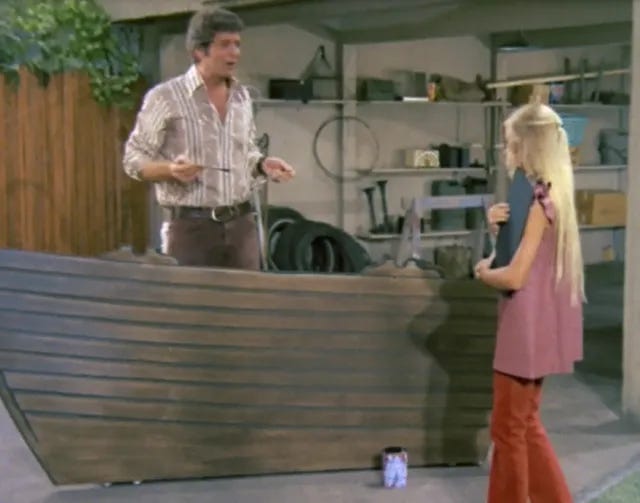
In May of 1775, two months before the Declaration of Independence existed as a document, Arnold and Ethan Allen raided Skenesborough and commandeered a ship belonging to Philip Skene, who was away in London.
The locals looked the other way.
Arnold took the ship, renamed it USS Liberty, and used it to launch an assault on the British shipyard at St. John, Quebec.
The first thing he did on that water was take a king’s man’s property and rename it after the thing they were fighting for.
Fort Ticonderoga fell to Benedict Arnold and the Green Mountain Boys that same month.
Then came Quebec, December 1775.
Arnold led a column through the Maine wilderness in the dead of autumn, three hundred men turned back, two hundred died on the march, and arrived at the walls of Quebec City having lost nearly half his force before the battle started.
In the assault on December 31st the commanding general was killed and Arnold was shot in the leg.
He did not retreat.
He maintained the siege until replaced months later, served as military commander of Montreal until the British pushed south, and was reported to be the last man to leave before the British arrived.
Last man out, one working leg, still on the line.
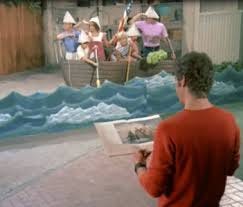
The summer of 1776 he was back in Skenesborough building the navy.
On October 11th he sailed it north and anchored between Valcour Island and the New York shore and waited.
Guy Carleton’s fleet was larger, better armed, crewed by professionals against Arnold’s carpenters and farmers.
The Americans lost the battle.
Arnold ran a fighting withdrawal south, burning his own ships as he went rather than surrender them, making it back to Whitehall with what little remained.
By any tactical measure it was a defeat.
By any strategic measure it was the act that saved the Revolution, because Carleton’s push south was delayed long enough that he abandoned the campaign for the season, which gave the Americans time to prepare at Saratoga, which is the battle that convinced France to enter the war, and without France the math of the entire Revolution changes.
Arnold was not finished.
In August of 1777 he led a relief column toward Fort Stanwix and sent a man ahead to warn the besieging forces that the formidable Benedict Arnold was coming with three thousand soldiers.
The nine hundred Native American fighters making up half the besieging army packed up and went home that same day.
He did not have to show up.
His name alone broke a siege.
Then Saratoga, October 7, 1777.
Arnold had been relieved of command by General Horatio Gates after a screaming argument over strategy.
He was technically a spectator.
He rode onto the field anyway, led charge after charge, and in the final assault a musket ball tore through his left leg — the same leg wounded at Quebec.
His horse went down on top of him, the weight shattering the bone.
He went down at the moment of victory, in a field he was not supposed to be in, fighting under orders that no longer applied to him.
The Continental Army accepted the British surrender at Saratoga.
The first surrender of the war.
France came in formally.
The turning point of the Revolution.
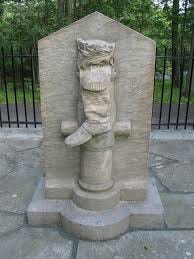
Benedict Arnold’s name does not appear on the monument at Saratoga battlefield.
There is a Boot Monument, honoring the leg, calling the man it memorializes only “the most brilliant soldier of the Continental Army.”
The generals’ monument nearby has four niches.
Three have statues.
The fourth, where Arnold’s statue would have stood, is deliberately empty.
It has been empty since 1887.
The enemy of the American patriot has never been a foreign army.
It has always been concentrated power, the kind that grants itself land, names itself the law, sits on the hill above the town it controls, and expects the people below to be grateful for the arrangement.
Philip Skene was that.
King George was that.
The original patriots did not fight an abstraction.
They fought a specific arrangement of power that had decided their lives, their labor, and their loyalty were the king’s property.
That is what makes someone an American hero.
Not purity.
Not a clean record.
Not the approval of a committee assembled after the fact to decide who deserves a statue.
What makes someone an American hero is showing up to fight that arrangement when it costs something real, on ground that matters, against odds that are not in your favor, with people who need you to be better than the situation allows.
My families arrived on that ground separately, from Calabria and Quebec and Massachusetts and the Scottish Highlands, shaped by different oppressions and different centuries.
All of them landing in a corridor that had already spent a hundred years as a site of resistance, from the Revolution to the War of 1812 to the Underground Railroad, which ran freedom seekers north through Whitehall and onto Lake Champlain steamboats heading for Canada.
The ground absorbed all of it and held the record even when the culture stopped bothering to transmit it.
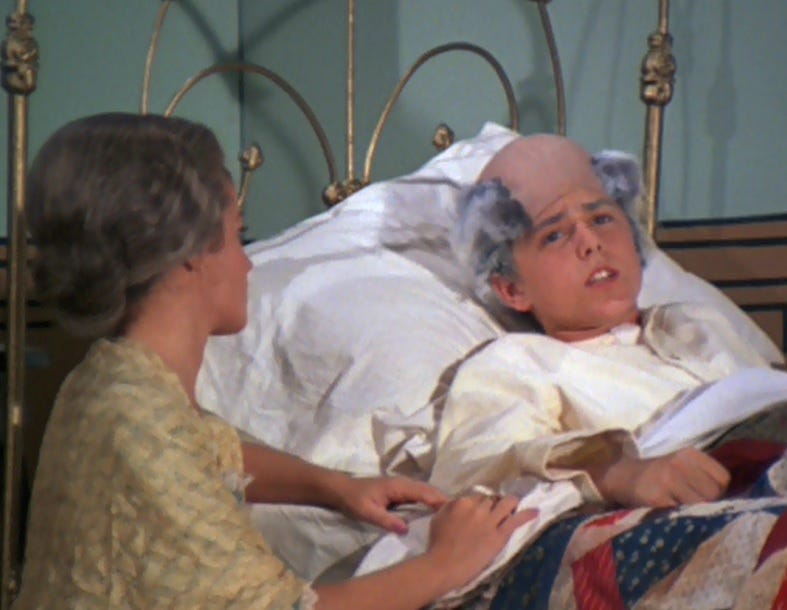
Benedict Arnold is what happens when you actually produce an American hero.
He showed up, took the king’s property, renamed it Liberty, marched men through a killing wilderness, built a navy from scratch on his enemy’s shipyard, lost a battle that won a war, broke a siege with his name alone, and went down at Saratoga with a shattered leg at the moment of the Revolution’s turning point.
We are willing to throw out that record in search of a cleaner one.
We find the flaw, lead with it, use it to disqualify everything that came before it, because a complicated person is harder to hold than a pure one.
What we lose when we do that is not just the historical record.
We lose the actual definition of what a patriot is, someone who fights the concentrated power, at personal cost, on the ground where it matters, without a guarantee of how the story ends or how they will be remembered when it does.
The people currently wearing the word patriot like a costume are the ones defending the concentration of power.
They are the Loyalists.
They are Skene on the hill, looking down at the town, expecting gratitude for the arrangement.
The actual tradition, the one the ground between Lake Champlain and the Hudson River holds in its bones, is the tradition of people who showed up when it was dangerous to do so and did the necessary thing regardless of what it cost them personally.
Bel Biv DeVoe told us in 1990.
Never trust a big butt and a smile.
Peggy Shippen was twenty years old and already an active courier between the British command and their intelligence network when she married Benedict Arnold.
Within two months of that wedding the most brilliant soldier in the Continental Army was writing letters to the enemy.
That does not erase what he built.
That does not fill the niche at Saratoga.
That does not put his name on the Boot Monument.
It just means he was human.
And we needed him anyway

.
Wow! That belongs in the amazing but true category. They say "history is written by the victors" which is why we cannot believe the written history of the past today. Folk tales handed down generation after generation may also be false, so how do we make people write the truth that can be published and learned by generations? As you know your man with the "big butt and a smile" is currently doing the same thing! I hope that given that we can converse across seas and nations today that somebody out there is building an archive of truth tellers so in generations to come they will believe what history is saying to them. Our future lives depend on our historical context.